Metal Detector Systems

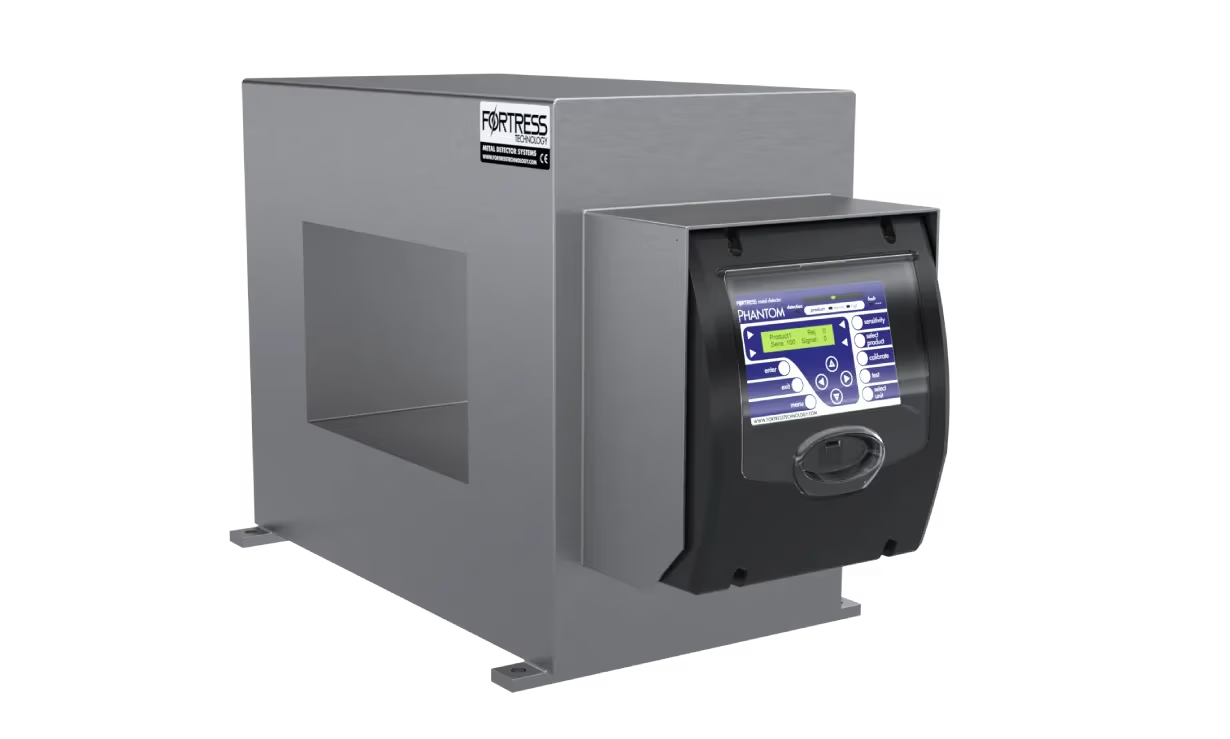
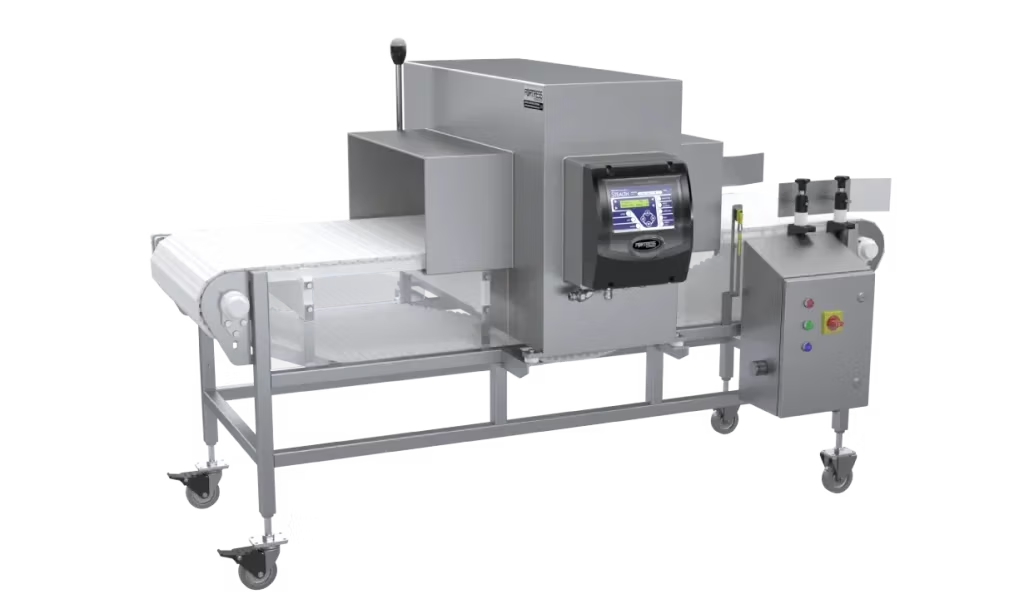
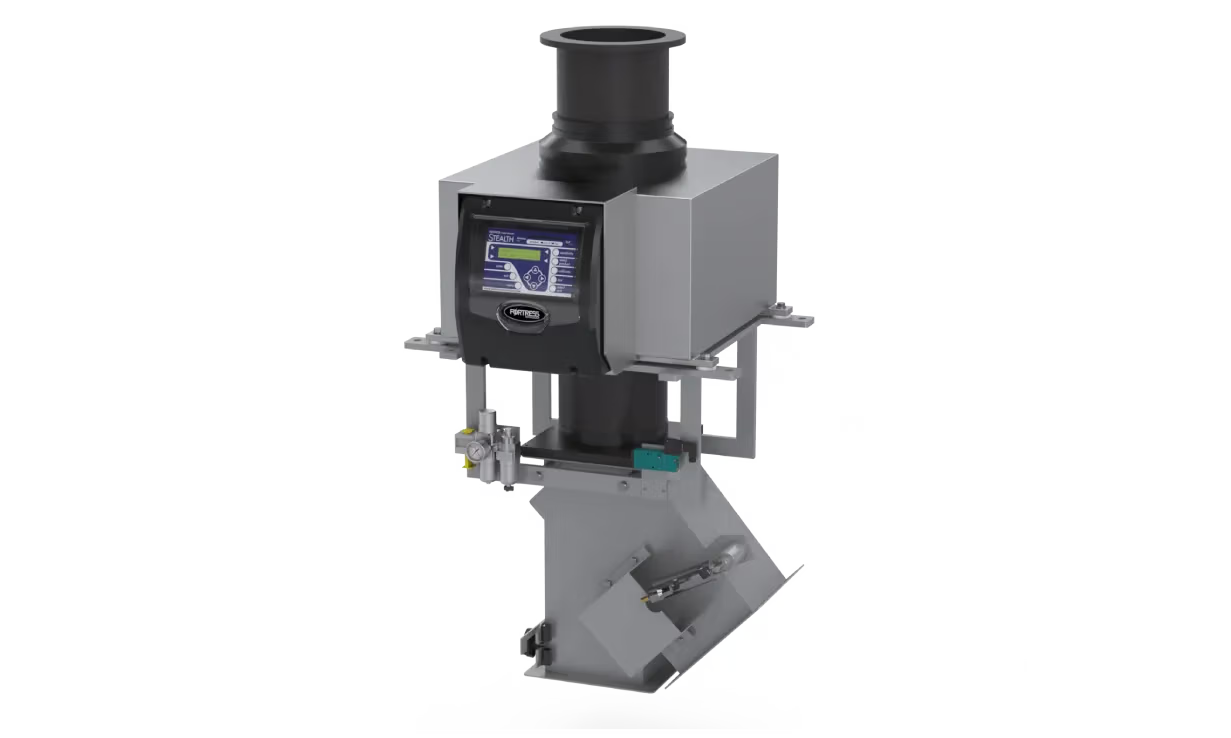
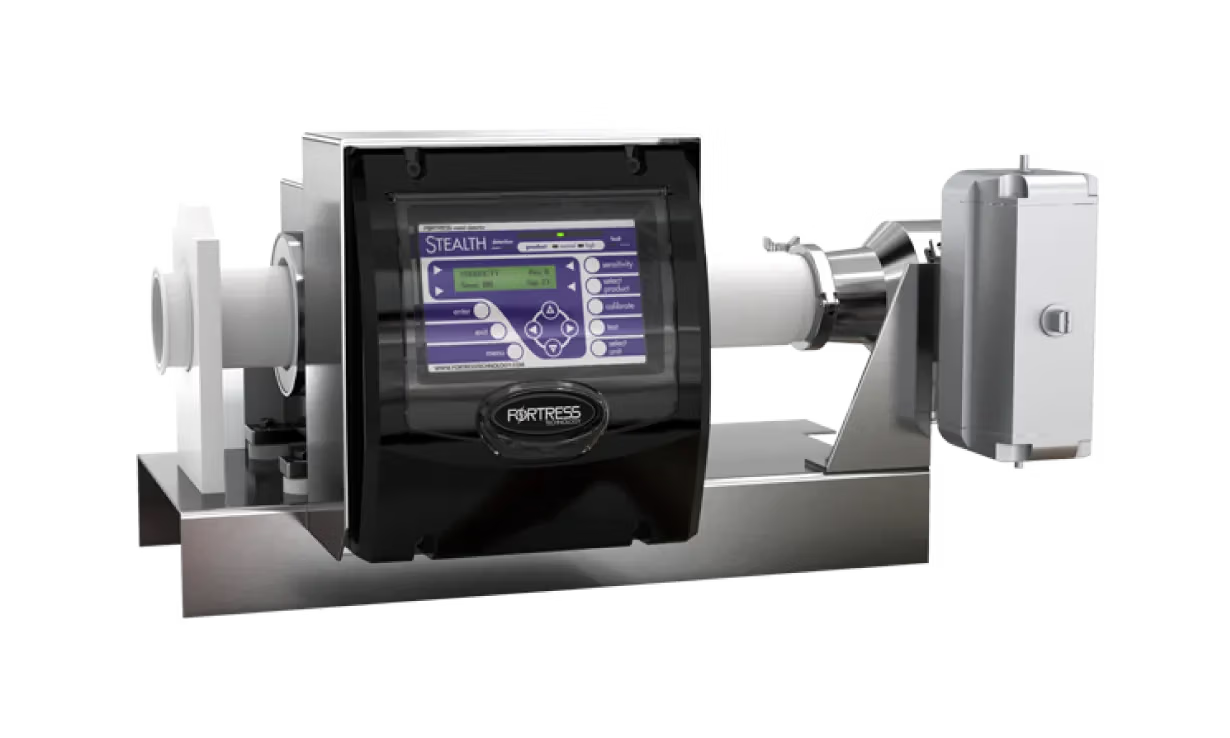
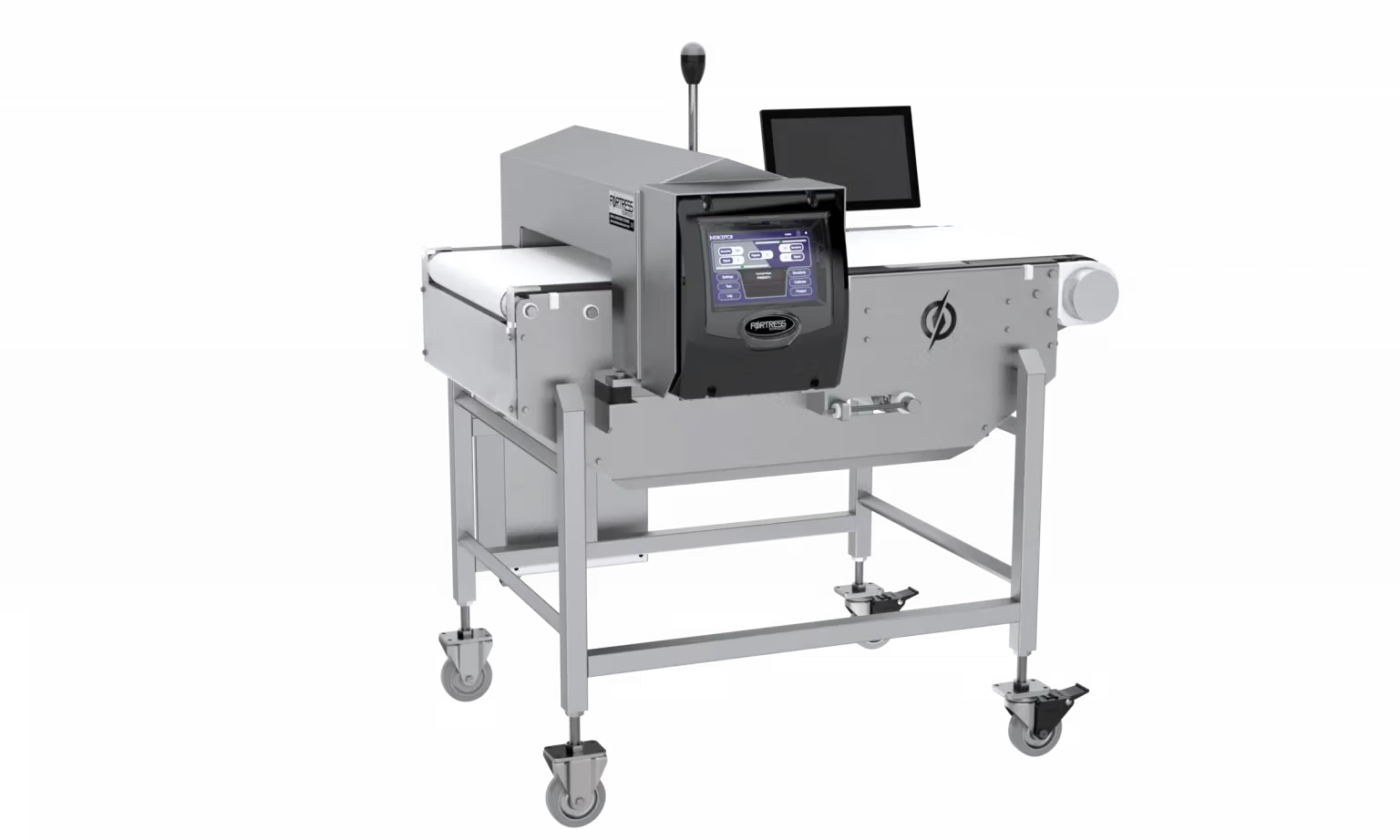
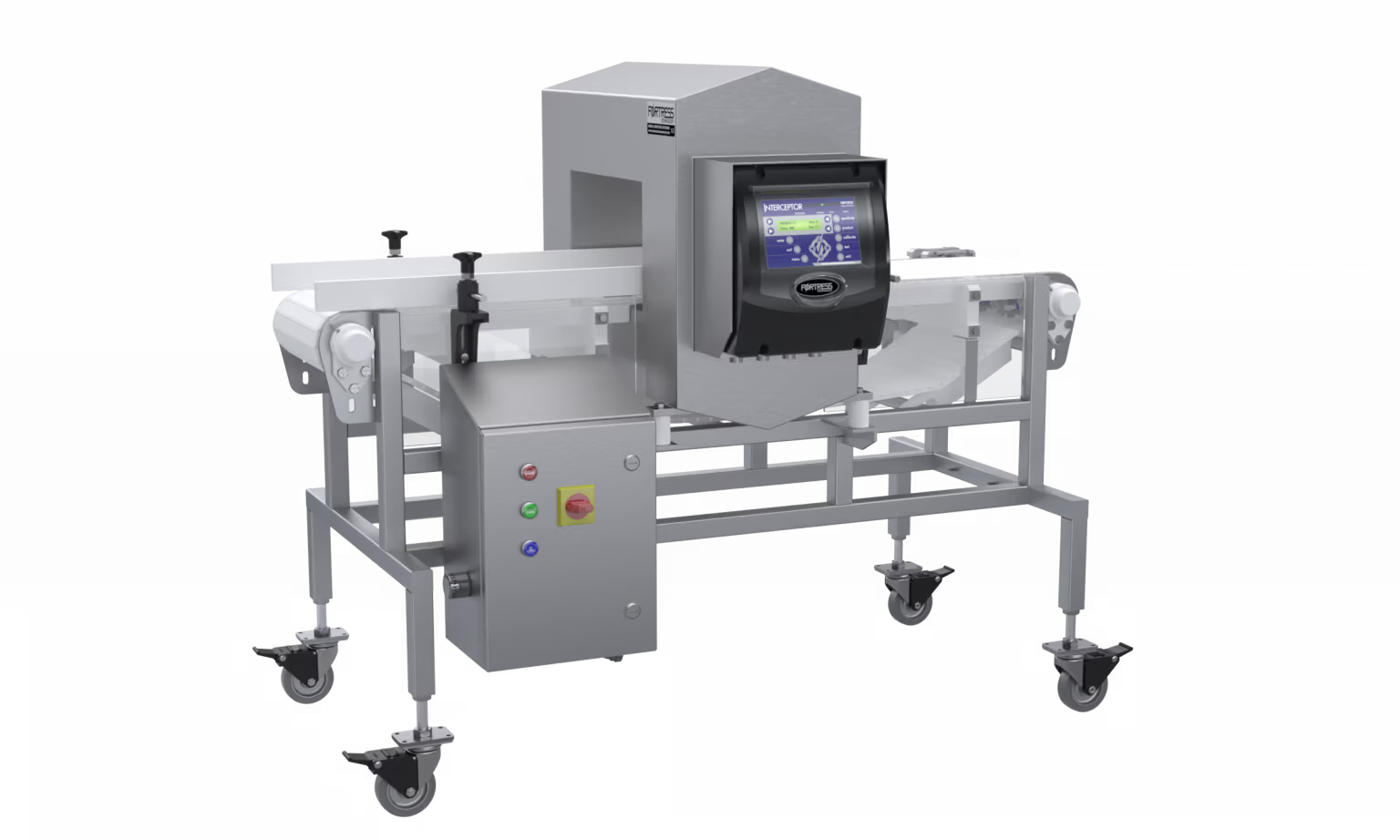
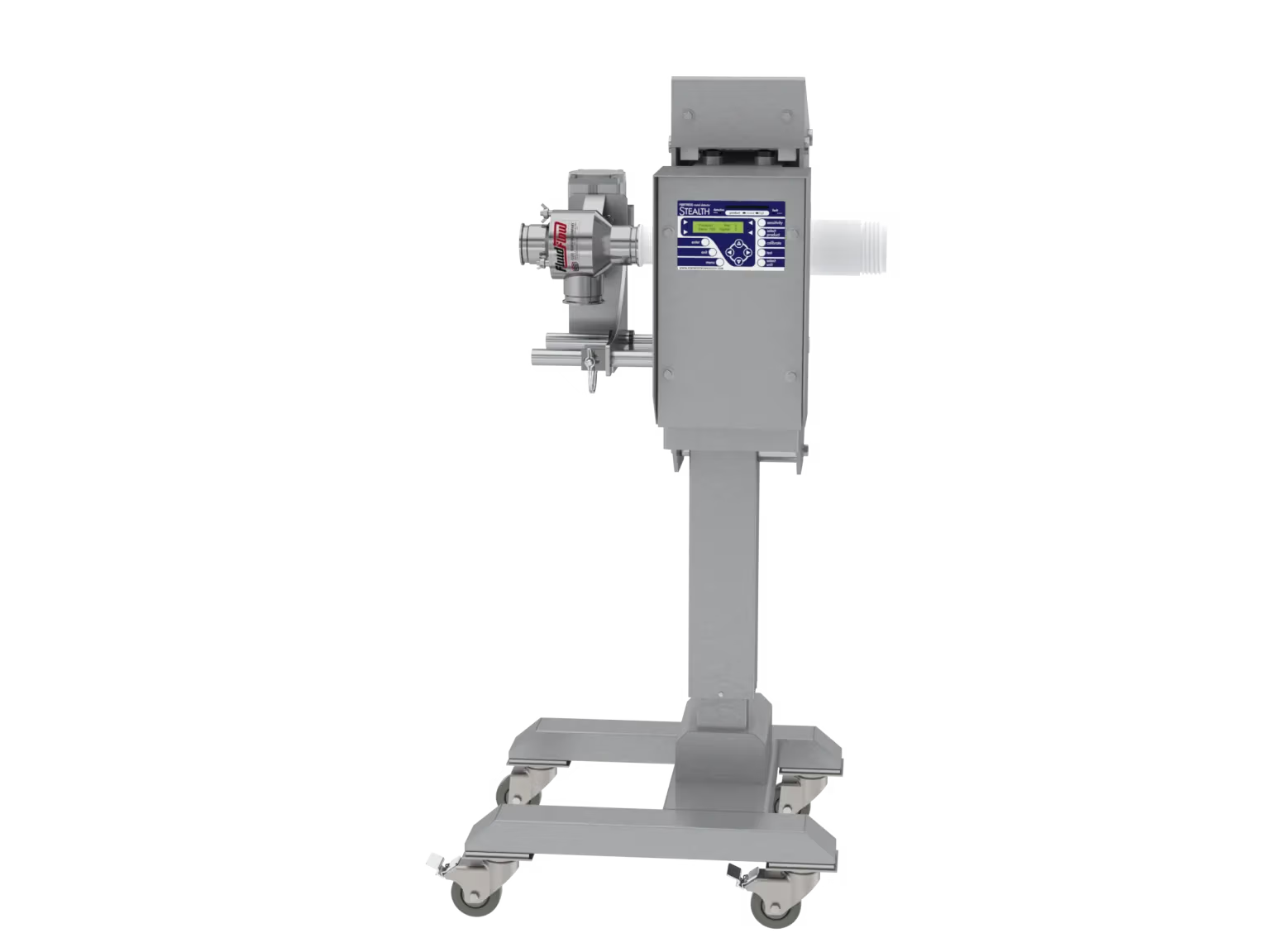
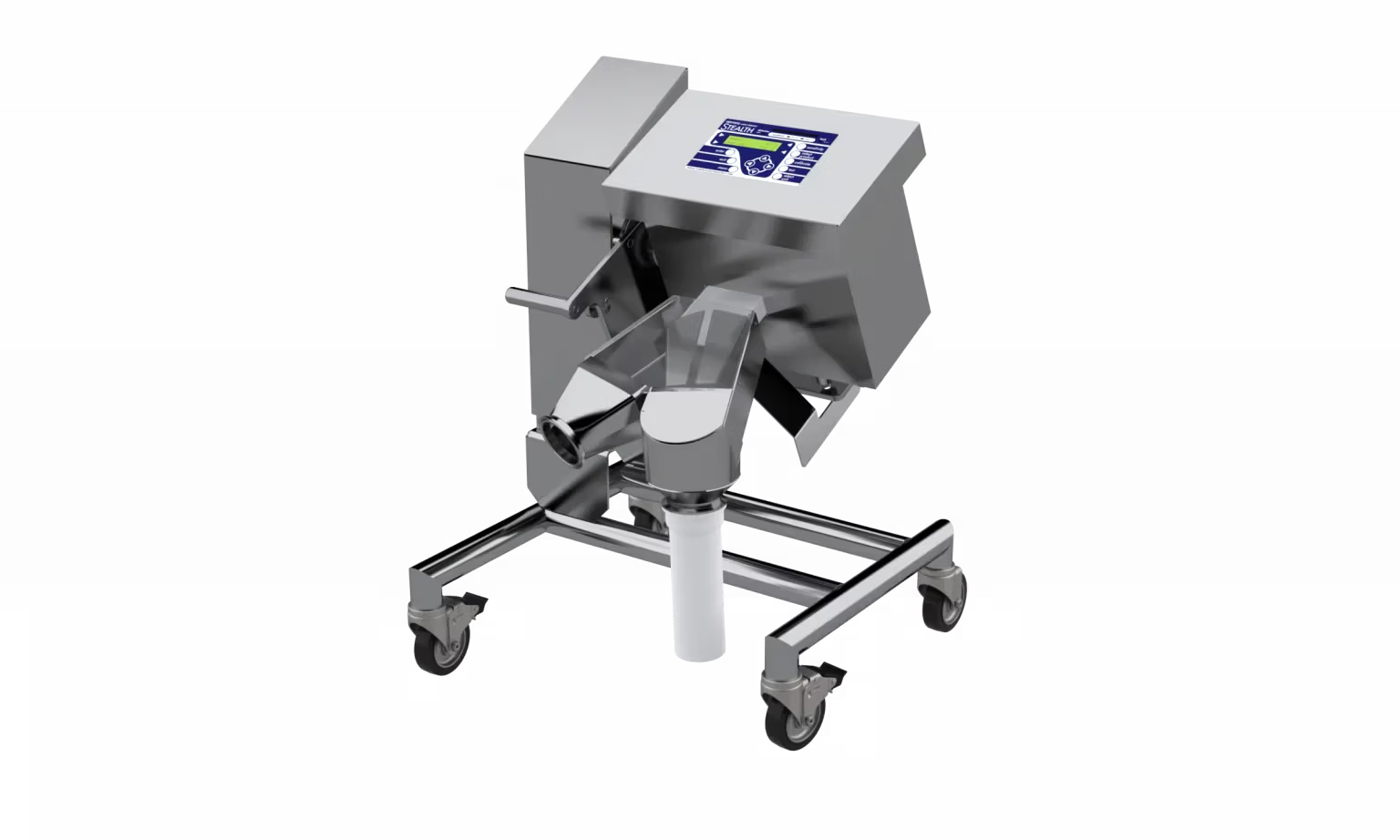
Designed to identify and remove metal contaminants from food products during the production and packaging process. These contaminants can include metal fragments, such as pieces of metal machinery, broken equipment parts, or even metal shavings that might inadvertently find their way into the food. Detecting and removing these contaminants is crucial to ensuring food safety and consumer confidence.

Wavesure
|

We are partnered with Fortress Technology, a leading global inspection equipment manufacturer. Simple Operation, Outstanding Reliability and Exceptional Performance are the core of every system.

Advanced detection

Inspects 50-100 lbs bags 

For free falling product 

For pre-bagger installation

For liquids and pastes

For ground meat

Quickly verifies rejects

For pills and capsules

For Foil packaging

For multi-lane inspection

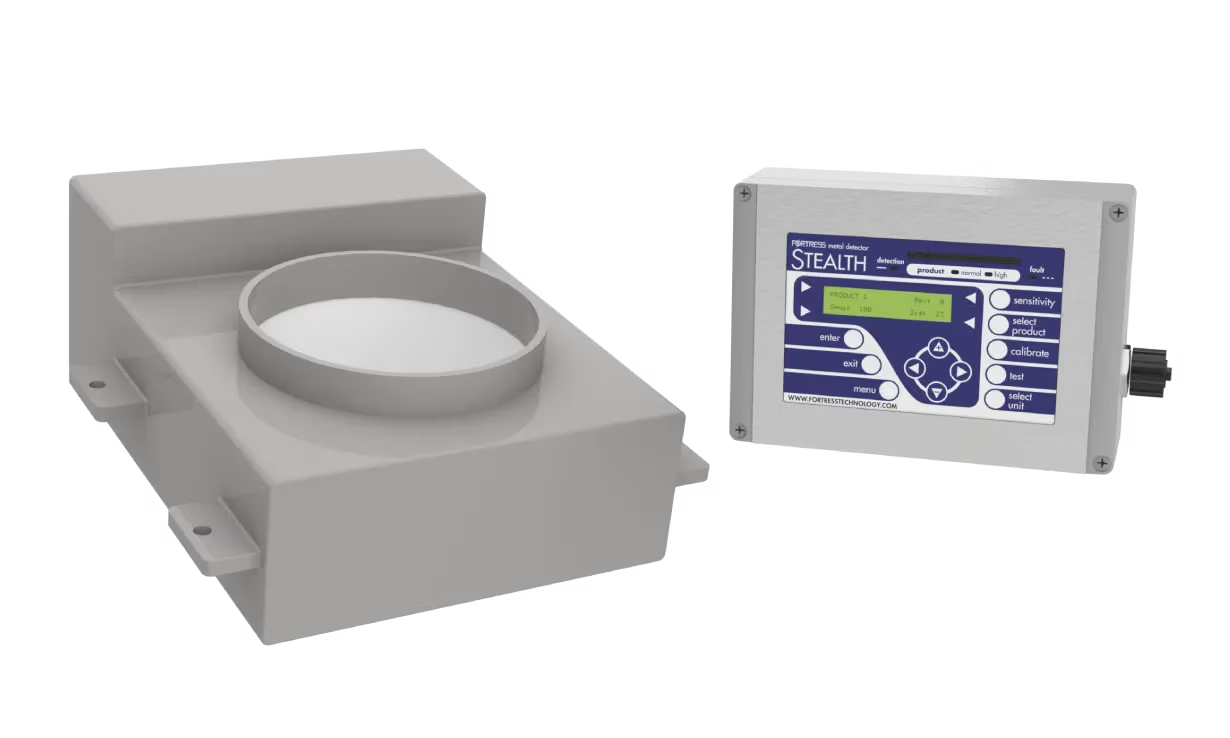
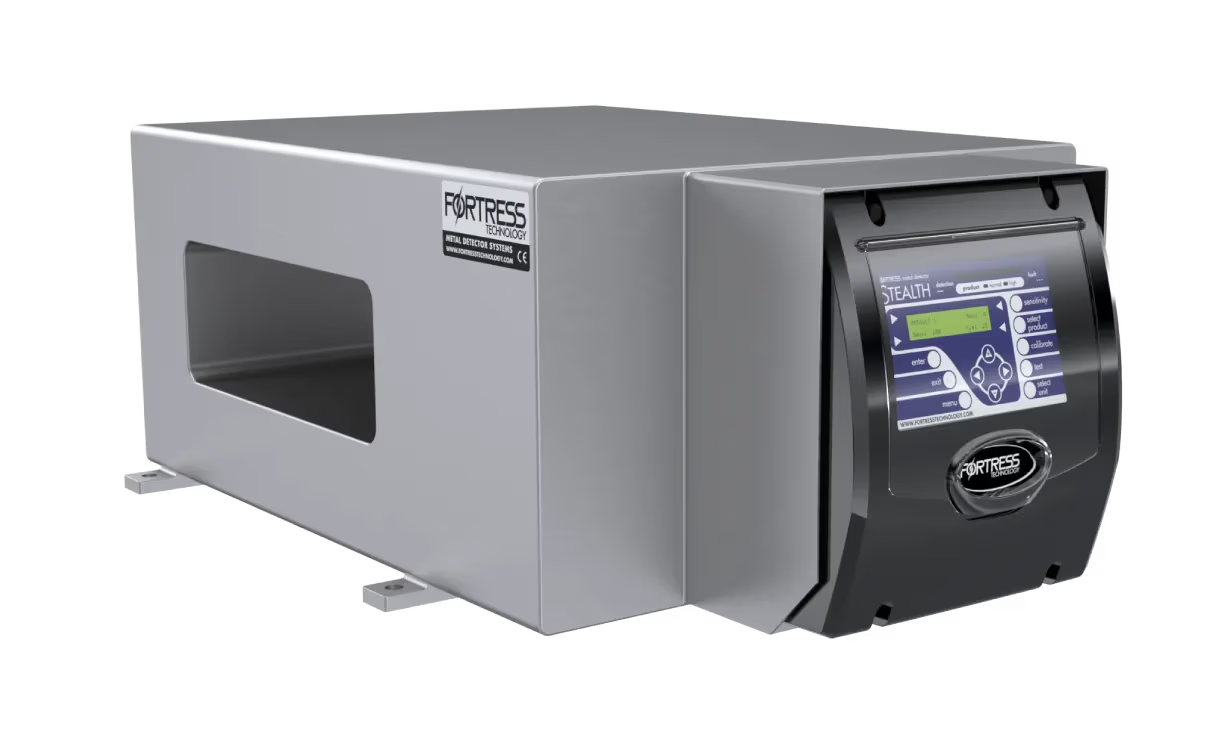
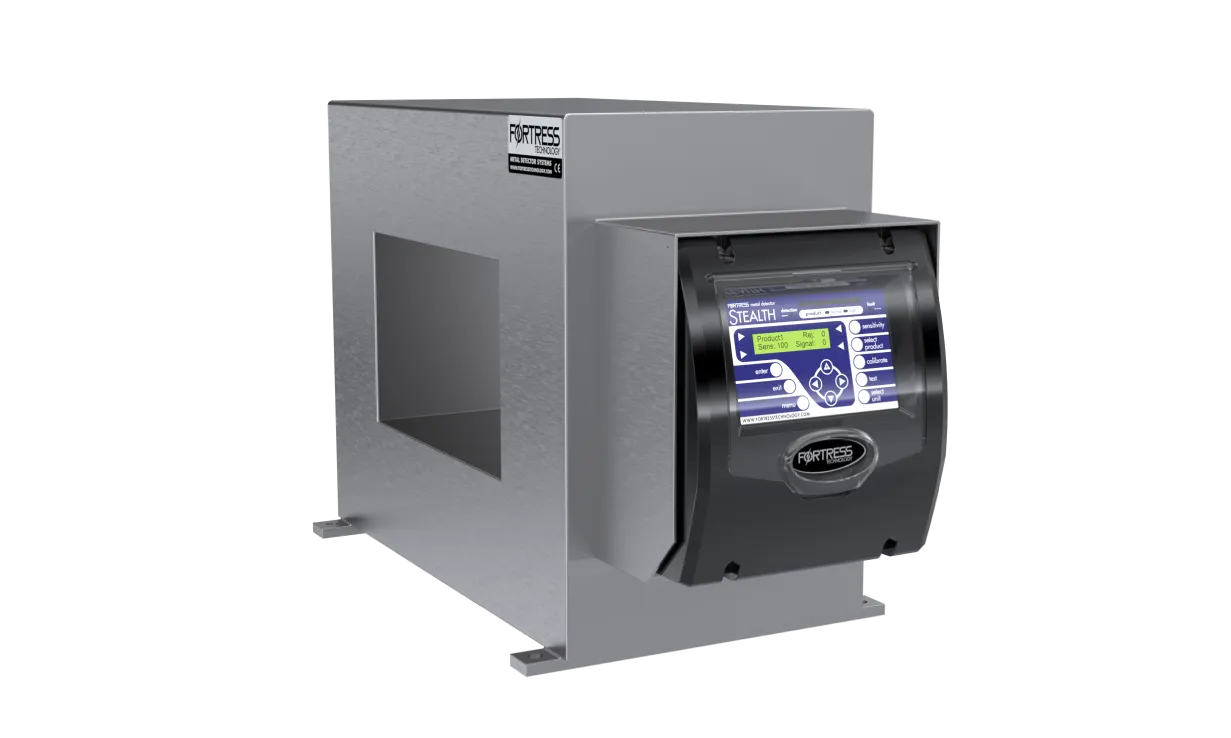
Stealth Metal Detector

metal detector head.webp

Fortress Technology

Stealth Metal Detectors use powerful Digital Signal Processing technology and have high sensitivity levels for detecting the smallest ferrous, non-ferrous, and stainless-steel contaminants. You can customize the Stealth to suit any application with custom Conveyor Systems and Reject options we manufacture to your specifications.

Advanced Detection

Uses powerful Digital Signal Processing (DSP) technology for superior sensitivity.

Detects All Metals

Identifies ferrous, non-ferrous, and stainless-steel contaminants.

Fully Customizable

Tailor it to your needs with custom conveyor systems and reject options.

Large Bag Metal Detector

stealth large bag metal detector.webp

Fortress Technology

Big Bag King – The industry’s most sensitive metal detector, reliably detecting 2.0 mm stainless steel in 50-100 lb. bags. Features automated data collection and custom heavy-duty stainless steel conveyors built for harsh environments and washdown conditions.

Unmatched Sensitivity

Detects 2.0 mm stainless steel in 50-100 lb. bags of dry product.

Automated Compliance

Built-in data collection & Contact Reporter Software for seamless record-keeping.

Heavy-Duty Construction

Custom stainless steel conveyors built for harsh conditions & washdown environments.

Gravity Metal Detector

stealth gravity metal detector.webp

Fortress Technology

Stealth Gravity Metal Detectors ensure precise inspection of free-falling products, with customizable pipe sizes and automated reject systems for seamless contaminant removal.

High-Precision Inspection

Detects contaminants in free-falling products.

Customizable Options

Available in various pipe sizes to fit your needs.

Automated Contaminant Removal

Advanced reject systems ensure product purity.

Pipeline Metal Detector

stealth pipeline metal detector.webp

Fortress Technology

Pipeline Metal Detection Systems inspect pumped liquids & pastes with customizable reject valves, pipe materials, and fittings. IP69K-rated for extreme washdown environments.

Inline Inspection

Detects contaminants in pumped liquids & pastes.

Customizable Design

Multiple reject valves, pipe materials, and fittings available.

Built for Tough Conditions

IP69K-rated for extreme washdown environments.

Interceptor DF Metal Detector

interceptor df metal detector.webp

Fortress Technology

Interceptor DF – The first multi-directional, multi-frequency metal detector, enhancing the detection of ultra-thin contaminants for superior processing line protection.

Revolutionary Technology

Uses simultaneous multi-frequency operation for superior accuracy.

Divergent Field Innovation

First metal detector with multiple field directions for enhanced detection.

Unmatched Sensitivity

Dramatically improves detection of ultra-thin contaminants in processing lines.

Interceptor Metal Detector

interceptor metal detector.png

Fortress Technology

Interceptor Metal Detectors boost stainless-steel detection by up to 100%, minimizing false rejects and waste. Optimized for wet and conductive products, it uses multi-frequency analysis for precise contaminant detection.

Enhanced Accuracy

Improves stainless-steel detection by up to 100%.

Reduces Waste

Minimizes false rejects and costly product loss.

Optimized for Wet Products

Ideal for meat, dairy, and other conductive items.

Multi-Frequency Analysis

Differentiates product signals from metal contaminants.

Meat Pump Metal Detector

stealth meat pump metal detector.webp

Fortress Technology

Meat Pump Metal Detection System ensures high-sensitivity detection of metal fragments in high-viscosity meats and vacuum-filled products, meeting the highest food industry standards for consumer safety.

Industry-Leading Safety

Designed to detect metal fragments in meat products.

Optimized for High-Viscosity Foods

Ideal for meats and products from vacuum fillers.

Advanced Detection Technology

Uses Digital Signal Processing for high-sensitivity contaminant detection.

Ensures Consumer Safety

Meets the highest food industry quality standards.

Pharmaceutical Metal Detector

stealth pharmaceutical metal detector.webp

Fortress Technology

Stealth Pharmaceutical Metal Detector ensures precise metal detection in tablets & capsules, meeting GMP & FDA compliance. Features easy-clean removable parts, adjustable design, and an air-free servo-driven reject system for seamless operation.

Precision Detection

Identifies smallest metal contaminants in tablets & capsules.

Pharma-Grade Compliance

GMP design meets FDA & QA standards.

Easy Maintenance

Removable contact parts for quick and simple cleaning.

Flexible & Compact

Adjustable height & angle to fit any tablet press.

Vertex Metal Detector

stealth vertex metal detector.webp

Fortress Technology

Stealth Vertex Metal Detector – Ultra-slim & compact, perfect for free-falling product inspection in tight packaging spaces, seamlessly fitting between Multi-head Weighers & Vertical Form Fill & Seal machines.

Ultra-Slim Design

Ideal for tight spaces in packaging lines.

Free-Falling Product Detection

Ensures precise contaminant removal.

Seamless Integration

Fits between Multi-head Weighers & Vertical Form Fill & Seal machines.

Laboratory Q/A Metal Detector

stealth laboratory qa metal detector.webp

Fortress Technology

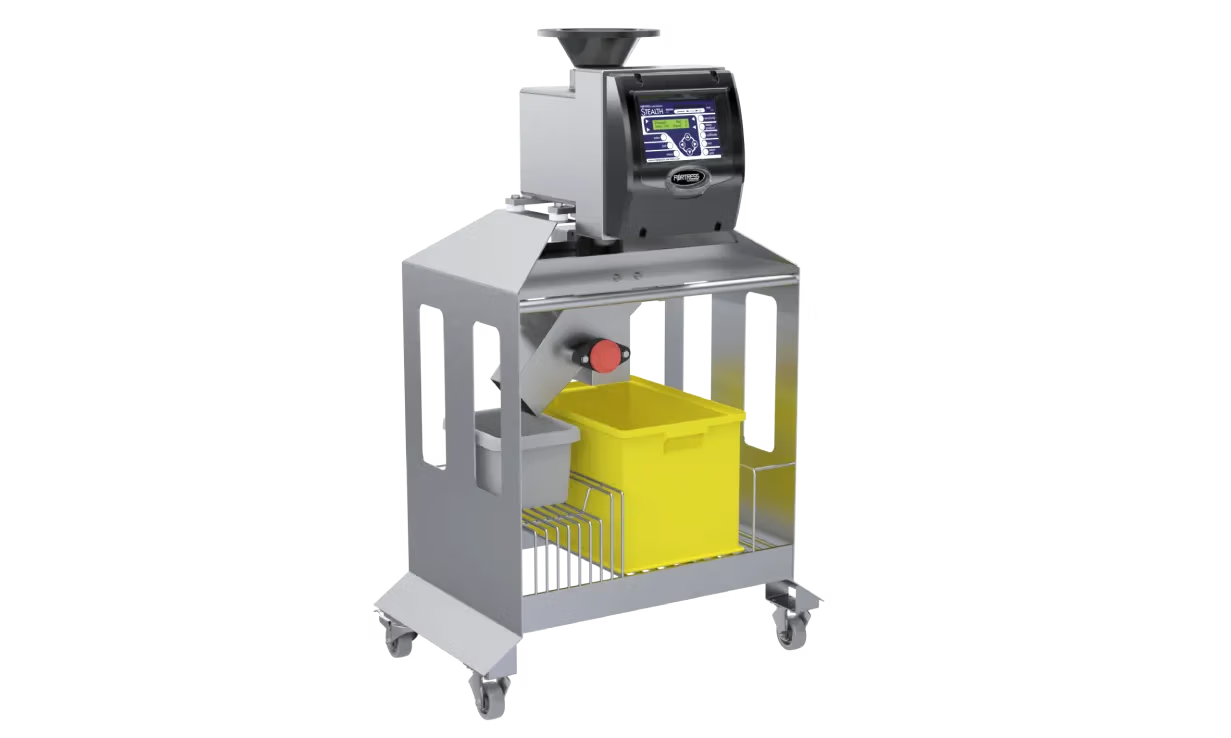
Stealth Laboratory Metal Detector – A portable, offline system for analyzing rejected products, quickly isolating metal contaminants for further inspection.

Offline Inspection

Perfect for examining rejected products.

Efficient Contaminant Separation

Quickly isolates metal contaminants for analysis.

Portable & Convenient

Roll-around design for easy movement and use.

Lumber Metal Detector

stealth lumber metal detector.webp

Fortress Technology

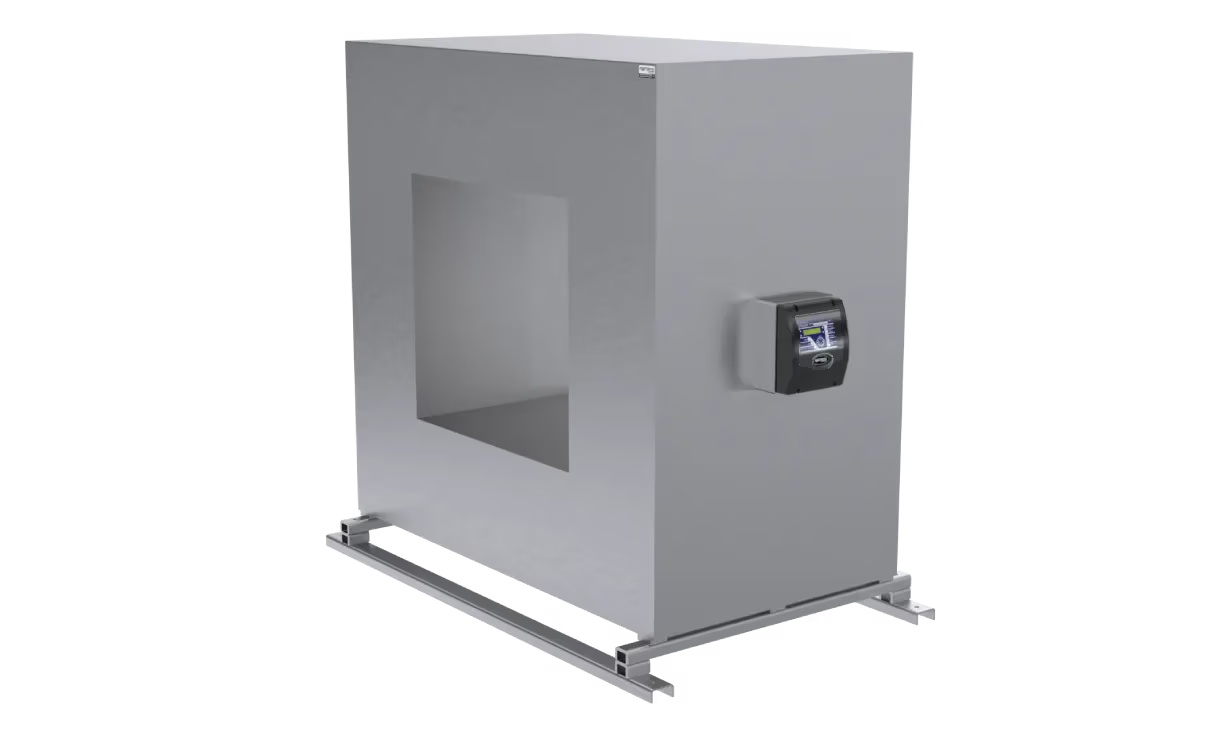
Lumber Metal Detectors – Rugged, custom-built for large-scale applications, scanning entire logs to protect downstream machinery from costly damage.

Built for Tough Environments

Custom-made for large-scale applications.

Full Log Scanning

Ensures thorough detection to prevent contaminants.

Protects Machinery

Prevents costly damage to downstream equipment.

Web Textile Metal Detector

stealth web textile metal detector.webp

Fortress Technology

Surface Web Metal Detection Systems – Detects metal fragments in sheeted materials, continuous webs, and thin products like textiles, paper, and packaging with custom aperture sizes and sectioned detection for pinpoint accuracy.

Wide-Area Detection

Scans sheeted materials, continuous webs, and thin products.

Versatile Applications

Ideal for textiles, paper, boards, films, and packaging.

Custom Aperture Sizes

Tailored to specific width requirements.

Sectioned Detection

Divides into individual zones for pinpoint accuracy.

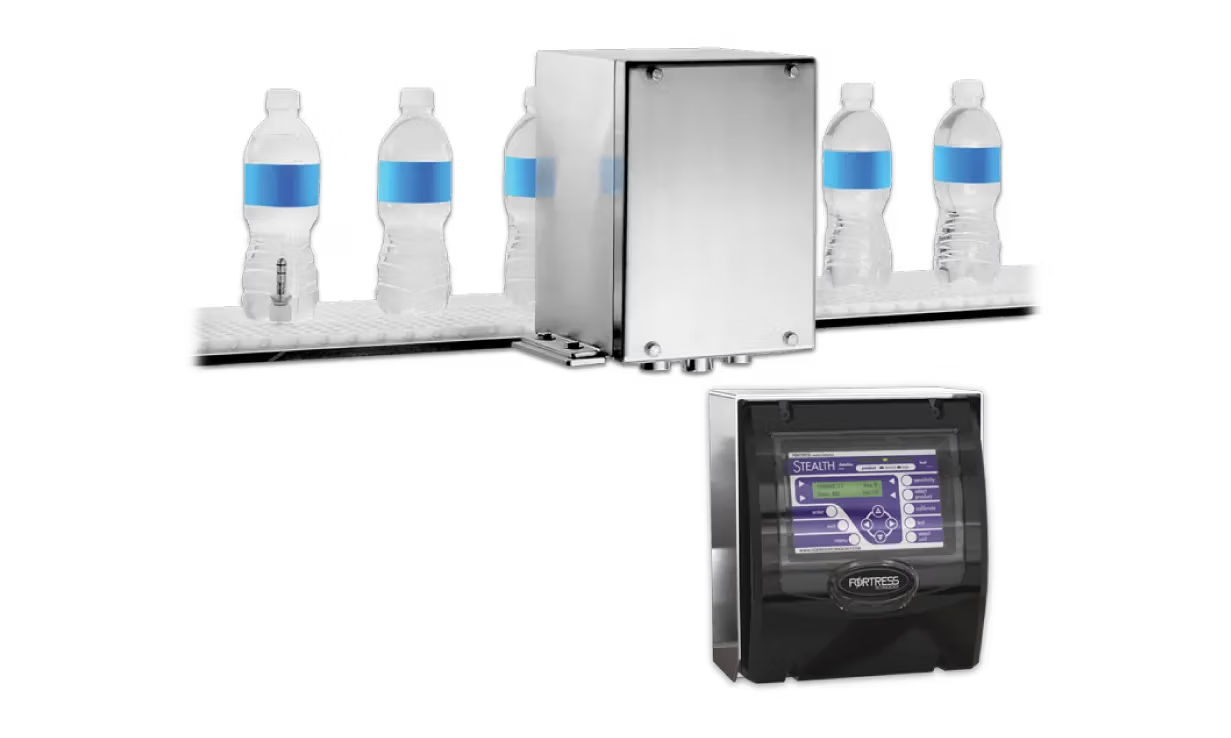
Vent Tube Metal Detector

stealth vent tube metal detector.webp

Fortress Technology

Vent Tube Metal Detector – Detects fallen vent and fill tube nozzles in plastic or glass bottles up to 3L/6.5 pints, with a retrofit design for easy integration into existing bottling lines.

Precision Detection

Identifies fallen vent and fill tube nozzles in bottles.

Versatile Compatibility

Works with plastic & glass bottles up to 3L/6.5 pints.

Easy Integration

Retrofit design allows seamless installation into bottling lines.

Surface Metal Detector

Fortress Technology

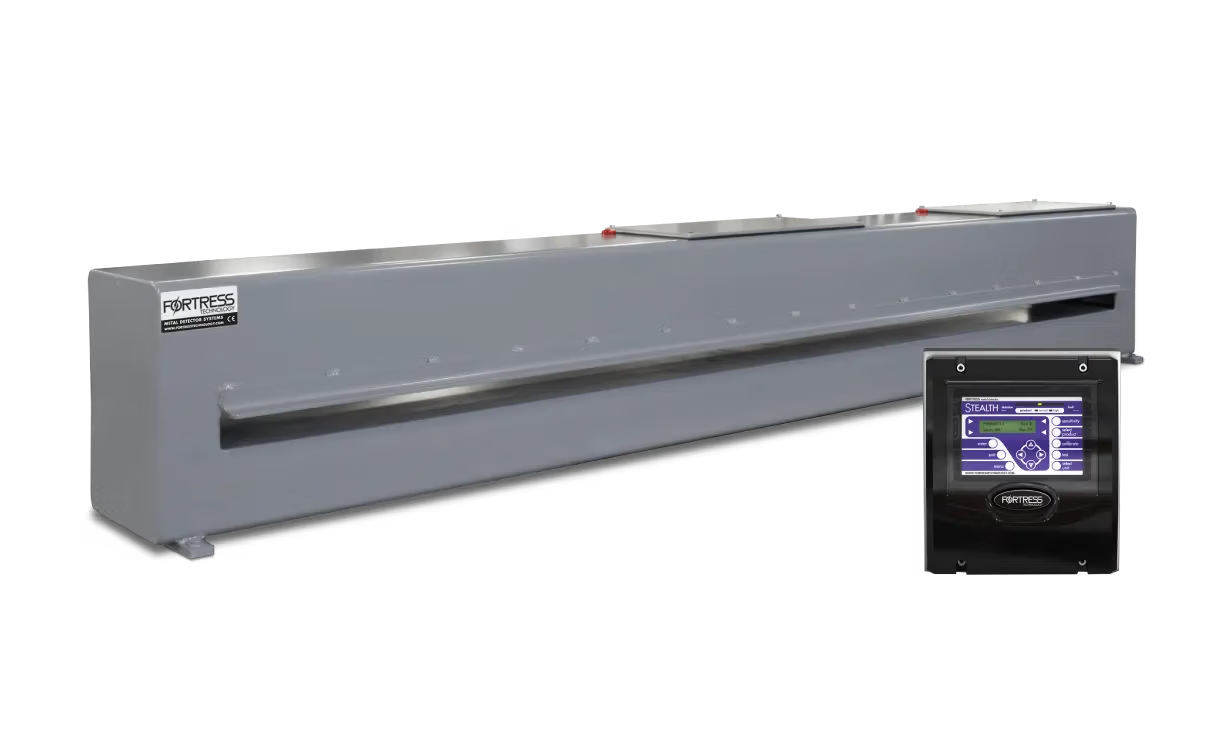
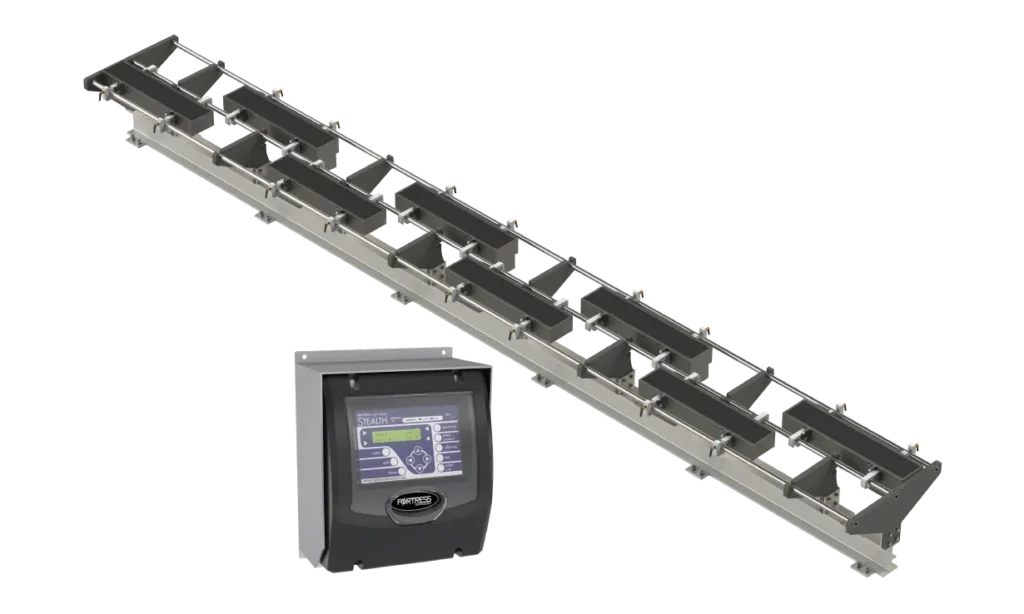
Surface Metal Detector – Custom-built for wide sheeted materials like paper, textiles, and boxboard. Features a rail-mounted, quick-removal design, expandable width, and high-speed performance for seamless inspection.

Wide Material Inspection

Detects metal contaminants in paper, textiles, and boxboard.

Modular & Expandable

Fits any web width with independent, repositionable modules.

Quick Removal & Easy Maintenance

Rail-mounted design allows effortless servicing.

High-Speed & High-Performance

Ideal for fast-paced production lines.

In-Foil Metal Detector

stealth in foil metal detector.webp

Fortress Technology

In-Foil Metal Detector – Detects iron & steel contaminants in foil-packaged fresh or frozen products, using high-sensitivity Digital Signal Processing while ignoring non-ferrous metals.

Precise Ferrous Detection

Identifies iron & steel contaminants in foil-packaged products.

Foil-Tolerant Technology

Ignores aluminum foil & non-ferrous metals for accurate results.

High-Sensitivity Performance

Uses Digital Signal Processing to detect even the smallest ferrous contaminants.

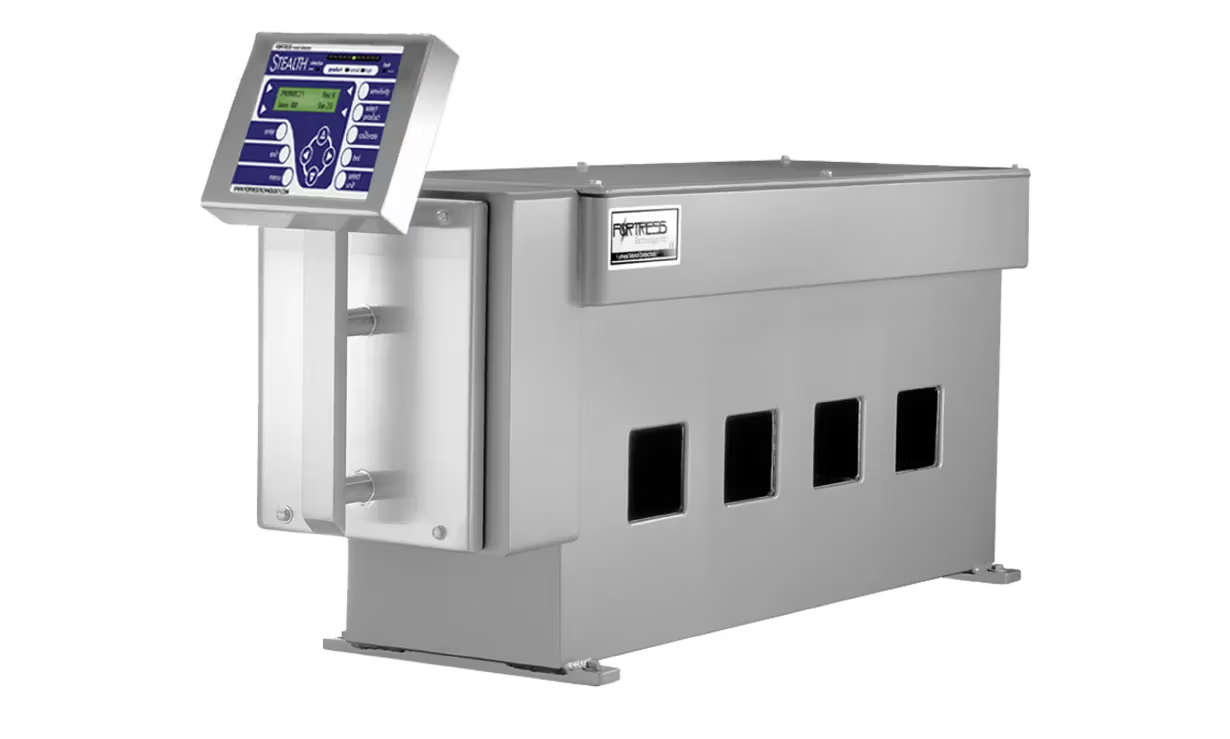
Multi-Aperture Metal Detector

stealth multi aperture metal detector.webp

Fortress Technology

Multi-Aperture Metal Detector – Compact design saves 50% floor space while lane-independent rejection reduces waste costs. Features multiple apertures for higher sensitivity, detecting ferrous, non-ferrous, and stainless steel contaminants.

Space-Saving Design

Reduces equipment footprint by 50%, optimizing factory floor space.

Lane-Independent Rejection

Minimizes waste costs with precise reject control.

High-Sensitivity Detection

Multiple small apertures improve metal detection accuracy.

Versatile Contaminant Detection

Identifies ferrous, non-ferrous, and stainless steel metals.

Halo Automatic Testing System for Metal Detectors

halo automatic testing system for metal detectors.webp

Fortress Technology

A hands-free testing system for ferrous, non-ferrous, and stainless-steel samples, eliminating manual challenges, reducing errors & injury risks, and improving efficiency on all Fortress metal detectors.

Hands-Free Testing

Eliminates manual testing challenges in complex environments.

Comprehensive Detection

Tests ferrous, non-ferrous, and stainless-steel samples.

Boosts Efficiency

Saves time, labor, and costs, reducing human error & injury risks.

Seamless Integration

Compatible with all Fortress metal detectors, installable on new or existing

FAQ

What is a metal detector and what does it do?

A metal detector is a food safety device that detects metal contaminants in products, ensuring they are removed before reaching consumers.

Primarily, metal detectors detect metal. However, certain specialized metal-detectable plastics or minerals with high iron content may trigger detection. Some stones with high ferrous minerals can also be detected, though not reliably. 

False rejects can occur due to factors like improper calibration, product effect (like salt or moisture), or electrical interference. Proper setup and expert guidance reduce these occurrences

Ideally, products to be foil-packaged should pass through a conventional detector system before they are packed. Where this is not possible, products packaged in aluminum can be inspected with an In-foil metal detector, which are suited for any foil-packaging application or aluminum casting inspection. It’s important to note that these systems are limited in the types of metal they can detect.

Aperture size plays a critical role in determining how small of a metal contaminant a metal detector can detect. In general, the smaller the aperture, the higher the sensitivity, meaning the system can detect smaller pieces of metal.

This is because the metal detector’s electromagnetic field is more concentrated in a smaller opening. As the aperture size increases, the signal becomes more dispersed, making it more difficult to detect small contaminants.

Key factors to understand:

  • Smaller aperture = better sensitivity
    A tighter opening allows the detector to identify smaller metal particles more effectively.
  • Larger aperture = reduced sensitivity
    Larger systems are often required for bigger products, but they may only detect larger contaminants.
  • Product size determines aperture size
    The aperture must accommodate the product, so finding the right balance between product clearance and detection performance is essential.
  • Product characteristics also matter
    Factors such as moisture, salt content, and density (known as product effect) can influence achievable sensitivity.

Why this matters for your operation

Choosing the correct aperture size is one of the most important decisions when selecting a metal detector. Oversizing the aperture can significantly reduce detection capability, while properly sizing it ensures you achieve the highest possible sensitivity for your application.

At Wavesure, we help customers evaluate their product and line setup to ensure the metal detector is properly sized, maximizing detection performance while maintaining efficient production.

Detection capability depends on the aperture size and product. However, metal detectors can detect metal contaminants as small as a fraction of a millimeter under ideal conditions

The size of a sensitivity test standard is determined by a combination of factors, including the metal type (Fe, Non-Fe, Stainless Steel), metal detector detector aperture size, product characteristics, and the level of sensitivity required by your food safety program.

Larger apertures generally result in reduced sensitivity, requiring larger test pieces. Product effect caused by moisture, salt, temperature, or density can also limit how small a contaminant can be reliably detected. Additionally, stainless steel is inherently more difficult to detect, so it typically requires larger test standards compared to ferrous or non-ferrous metals.

Ultimately, test standard sizes should be established based on realistic detection capability, validated under actual operating conditions, and aligned with your risk assessment, customer requirements, and audit standards.

Management must evaluate the costs and implications associated with a failed test and decide. Most facilities test at start-up, hourly, and at product changeovers, depending on their HACCP plan. 

Most false rejects come from unstable product signals, radio frequency interference, isolation missing in the nearby hardware, vibration, or incorrect settings. Our techs perform root-cause diagnostics to stabilize performance and train your team to prevent repeat issues.

Scroll to Top